
Arctera Unified Platform
What Is the Arctera Unified Platform?
The Arctera Unified Platform is a communications governance platform that delivers compliance intelligence across enterprise communications and data. It enables compliance, legal, risk, and IT teams to maintain consistent oversight, defensible records, and reliable access to information across workflows.
Built on a unified data foundation, the platform captures communications once and preserves them with full context at creation, supporting archiving, surveillance, and discovery from a single system. By eliminating fragmented systems, it removes the need to move, duplicate, or reconstruct data during audits, investigations, and legal response.
Why Traditional Communications Governance Approaches Break
Disconnected Systems Across the Lifecycle
When communications governance is implemented across separate systems for capture, archiving, surveillance, and ddiscovery, each system uses different data models and processing approaches. This prevents your organization from maintaining a single, consistent record across workflows.
Data Movement and Reprocessing Increases Risk
When governance functions are split across systems, data must be moved, duplicated, and reprocessed between tools. This introduces inconsistencies, incomplete records, and gaps in auditability as volumes expand.
Reconstruction Creates Delays and Uncertainty
Because communications are not maintained in a single system, your teams must reconstruct interactions across channels during investigations and discovery. This introduces delays, increases effort, and makes it harder to verify completeness under regulatory or legal pressure.
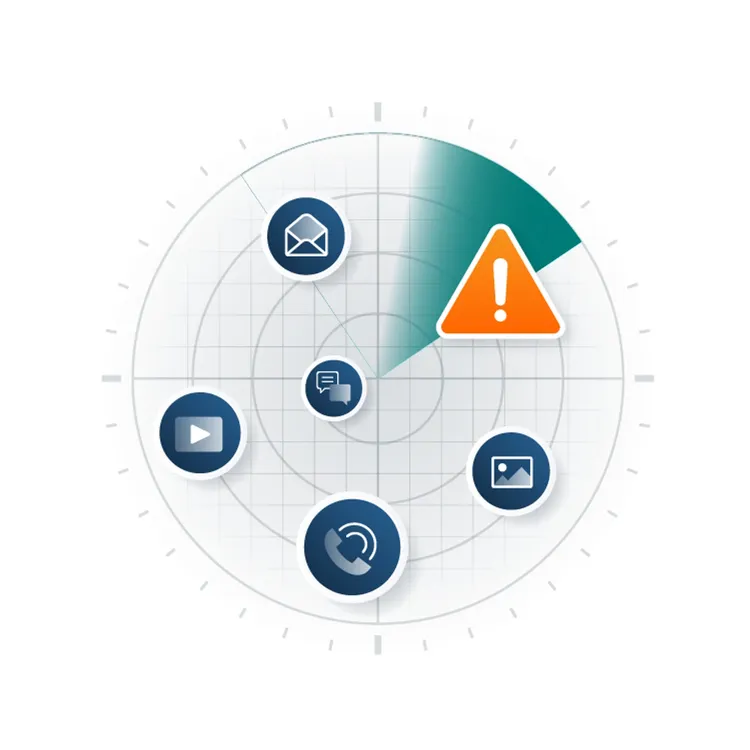
Where Gaps Typically Appear
check-circle: Communications captured but not available for surveillance
check-circle: Inconsistent classification across channels leading to uneven retention
check-circle: Discovery results varying by system or indexing limitations
check-circle: Data reprocessing required to reconstruct conversations
check-circle: Limited visibility into how governance decisions were applied
Platform Capabilities

Capture
Capture ingests communications across enterprise channels at the point of creation. It preserves content, metadata, and context as a complete record. The platform captures communications from more than 130 sources across enterprise systems, providing consistent coverage without gaps. By capturing communications once into a unified data foundation, it eliminates duplication and avoids reconstruction across surveillance, retention, and ediscovery workflows.

Classify
Classification applies context, policy, and metadata to communications at ingestion. It structures data using AI-driven and rule-based models to support consistent governance. The platform uses more than 250 AI models and over 1,400 pre-built policies to identify content, risk signals, and regulatory conditions. Because classification operates on the unified data foundation, policies are applied consistently across surveillance, archiving, and discovery without reprocessing data.

Archive
Archiving stores communications in an immutable, governed state within a centralized system of record. The platform maintains a WORM-compliant archive built from the same captured record, eliminating the need to move or duplicate data across systems. It applies policy-driven retention, disposition, and audit logging at ingestion to maintain consistency across the lifecycle. This creates a continuous, defensible record that supports long-term compliance without fragmentation.

Surveillance
Surveillance evaluates communications for conduct and regulatory risk using policy-driven rules and contextual signals. The platform powers surveillance workflows by identifying risk patterns and generating alerts for review, prioritization, and escalation. It includes transcription and translation to convert voice and multilingual communications into searchable formats for consistent review. By operating on a unified data foundation, surveillance uses a single, complete record to reduce noise and maintain full auditability.
Discover
Discovery retrieves and reconstructs communications for investigation and eDiscovery workflows. The platform supports end-to-end eDiscovery, including early case assessment (ECA), review, and production from a single system. Because discovery operates on the unified data foundation, data does not need to be moved, duplicated, or reprocessed across systems. This enables faster scoping of matters, reduced data volumes, and consistent chain of custody throughout the discovery process.
How the Arctera Platform Works
check-circle: Capture communications at the source: Collect communications, content, files and AI-generated content at the point of creation and preserve metadata and context as a complete record.
check-circle: Apply classification and policy controls: Apply classification, policy, and metadata at ingestion to structure communications for governance workflows.
check-circle: Archive with retention and audit controls: Store communications in an immutable system of record with retention, disposition, and audit controls.
check-circle: Perform surveillance for conduct and regulatory risk: Evaluate communications using policy-driven rules and AI-assisted workflows to identify risk signals, reduce false positives, and route prioritized alerts to compliance teams for supervisory review.
check-circle: Reconstruct for investigation and eDiscovery: Retrieve and reconstruct communications across channels to support investigations and eDiscovery without reprocessing data, enriched with AI-generated context and connected enterprise data.

Close the Loop on Compliance
How the Arctera Platform Reduces Risk and Complexity

Reduce Regulatory Risk
Maintain complete, defensible records of communications across channels to meet regulatory requirements. Communications are captured once and preserved with full context in an immutable archive, supporting consistent surveillance, retention, and auditability without gaps from disconnected systems.
Reduce Review Effort and Scale Surveillance
Reduce manual review volume and focus on high-risk communications. Policy-driven classification prioritizes relevant signals and reduces false positives using a single, consistent data set. Organizations reduce daily review effort by up to 67% while scaling surveillance without increasing headcount.

Improve Audit and eDiscovery Readiness
Respond to audits, investigations, and eDiscovery requests with complete, consistent records. Communications can be searched, scoped, and produced without reprocessing or reconstructing data across systems. Organizations reduce eDiscovery spend by up to 70%.

Govern AI Communications
Capture and govern AI-generated communications alongside traditional channels within the same governance workflows. Prompts, responses, and AI-assisted interactions are preserved with full context and subject to consistent classification, surveillance, and retention policies.
Supported Communication Platforms
The Arctera Unified Platform captures and governs communications and related enterprise data across a broad range of enterprise systems using a unified data foundation. Communications are collected from collaboration, messaging, voice, financial, and AI platforms and standardized at ingestion into a consistent structure. This allows surveillance, retention, and discovery workflows to operate across sources without system-specific processing or data reconstruction. All records are preserved with full context, including content, metadata, participants, and relationships between interactions.

Collaboration & Unified Communications
Capture conversations, meetings, and collaboration activity across unified communication platforms with full message and participant context.
Includes: Microsoft Teams, Slack, Zoom, Webex, RingCentral

Email & Storage
Capture email and stored content with full structure, attachments, and metadata for retention and regulatory requirements.
Includes: Microsoft Exchange, Microsoft 365, Gmail, Google Workspace, Azure Blob, Amazon S3

File Sharing
Capture document activity across file-sharing platforms, including versions, metadata, and embedded communications.
Includes: SharePoint, OneDrive, Google Drive, Box, Dropbox

Mobile, Social & Messaging
Capture communications across mobile and social platforms, including off-channel messaging, with message content and activity context preserved.
Includes: WhatsApp, WeChat, SMS (iMessage, Android), Telegram, Signal, LinkedIn, X (Twitter)

AI Communications
Capture AI interactions, including prompts and responses, and preserve AI-generated content for surveillance, retention, and ediscovery workflows.
Includes: Microsoft Copilot, ChatGPT
Financial Platforms
Capture structured communications from financial systems to support surveillance, audit, and regulatory reporting.
Includes: Bloomberg, LSEG (Refinitiv), Symphony, FX Connect, Tradeweb
Who is the Platform Built For?

Compliance & Regulatory Teams
Maintain complete and defensible records across expanding communication channels where visibility is often inconsistent. The platform captures communications with full context and applies classification and surveillance at ingestion, maintaining audit-ready records without gaps or reconstruction across systems.
Surveillance & Conduct Risk Teams
Identify meaningful conduct risk across large communication volumes where most alerts are noise. The platform evaluates communications on a single, consistent record, enabling prioritized review without fragmented data or duplicated monitoring workflows.

Legal & eDiscovery Teams
Access communications and data quickly and efficiently for investigations, litigation, and regulatory requests where data is often distributed and incomplete. The platform delivers end-to-end eDiscovery support, maintaining consistent, audit-ready records without data reprocessing, and uniquely enables teams to embed the governed enterprise archive directly into their AI tool.
IT & Communications Platform Owners
Maintain consistent capture, retention, and access across communication systems that were not designed to work together. The platform provides unified capture and a centralized archive, applying retention policies consistently and enabling access for audits, investigations, and regulatory requests without managing separate systems.
Frequently Asked Questions
The platform applies AI within governance workflows in an explainable and controlled way, rather than relying on opaque models. It uses machine learning and NLP for classification, language detection, sentiment analysis, transcription, and translation, all operating on the same communications record. Capabilities such as the InsightAI assistant and AI-driven early case assessment (ECA) allow users to query and summarize data grounded in their own archived content.
At the same time, the platform captures and governs AI-generated communications, including prompts and responses from tools such as Microsoft Copilot and ChatGPT. This enables organizations to adopt AI capabilities at their own pace while maintaining transparency, auditability, and control.
Understand Your Current Governance Gaps
Assess how your current tools handle capture, surveillance, retention, and discovery—and where fragmentation introduces risk.