
Capture Communications at the Source
What Is Communications Capture?
Communications capture is the process of recording business communications at the point of creation to ensure records are complete, accurate, and audit-ready. It enables organizations to meet regulatory requirements while reducing the risk and delay of reconstructing data during audits or investigations. Within the Arctera Unified Platform, capture operates across systems to maintain consistent, defensible records.
Why Capture is Foundational to Communications Governance?
Communications capture is foundational because it creates a complete, auditable record used for audits, investigations, and regulatory review.
Missing Data Creates Risk
- Missing data delays audits and investigations
- Records must be reconstructed under pressure
- Gaps are often discovered during regulatory review
Communication Is Fragmented
- Communication spans messaging, voice, mobile, and AI systems
- Context can be edited, deleted, or lost
- Data must be captured as activity occurs
Capture Creates a Defensible Record
- Creates a complete record from the start
- Eliminates reconstruction across systems
- Supports audits, investigations, and regulatory reporting
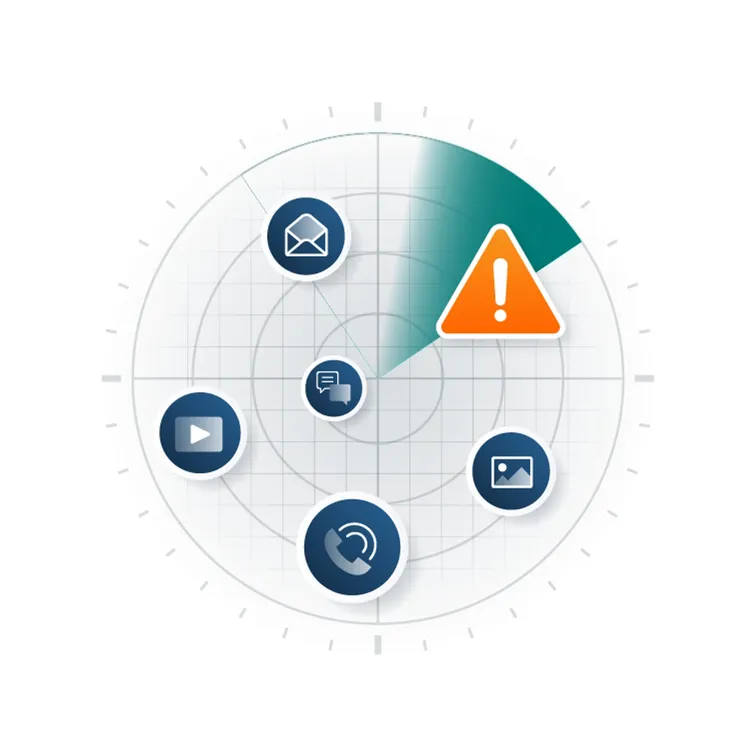
What Arctera Capture Does
checkin-circle: Captures communications across 130+ sources, including messaging, meetings, voice, and AI platforms
checkin-circle: Extends coverage beyond native tools to include external and non-native communication platforms
checkin-circle: Collects data directly from source systems using APIs, exports, and connector-based methods
checkin-circle: Preserves full interaction context, including participants, timestamps, threads, attachments, and relationships
checkin-circle: Standardizes data at ingestion so it can be consistently reviewed, retained, and used in investigations
How Capture Works
Capture works by collecting data from source systems, standardizing it, and delivering it into a unified archive for governance workflows.
Business Impact
Avoid gaps that lead to regulatory exposure
Reduce the risk of fines and audit findings by capturing communications consistently across systems and preserving a complete, auditable record.
Respond faster to audits and investigations
Eliminate reconstruction by providing immediate access to complete, contextual communication records across systems.
Strengthen defensibility of legal and compliance actions
Ensure communications are complete, time-aligned, and traceable so decisions can be explained during investigations and litigation.
Ensure consistent oversight across all communication channels
Apply surveillance and governance policies across messaging, voice, video, collaboration, and AI systems using a single, consistent dataset.
What Platforms Does Arctera Capture Support
Arctera Capture collects communications across enterprise systems using multiple ingestion methods, including APIs, journaling, file ingestion, and AI interaction logging. Data is captured directly from source systems wherever possible to preserve context and avoid reconstruction. All records are standardized into a consistent, auditable format for surveillance, retention, and discovery workflows. Capture operates without wrapper applications, maintaining native security models while enabling a unified approach across communication channels.
Collaboration & Unified Communications
Capture messages, meetings, and collaboration activity via native APIs, preserving content, edits, and participant context with transcription for voice and video.
Integrations include:
check-circle: Microsoft Teams
check-circle: Slack
check-circle: Zoom
check-circle: Webex
check-circle: RingCentral
Email & Storage
Capture email and stored content using journaling and APIs, preserving message structure, attachments, and delivery metadata for regulatory completeness.
Integrations include:
check-circle: Microsoft Exchange
check-circle: Microsoft 365
check-circle: Gmail
check-circle: Google Workspace
check-circle: Azure Blob
check-circle: Amazon S3
File Sharing
Capture document activity across file-sharing platforms, preserving versions, metadata, and access activity for governance workflows.
Integrations include:
check-circle: SharePoint
check-circle: OneDrive
check-circle: Google Drive
check-circle: Box
check-circle: Dropbox
Financial Platforms
Capture communications from regulated financial platforms using structured ingestion, preserving message content and metadata for surveillance and audit.
Integrations include:
check-circle: Bloomberg
check-circle: LSEG (Refinitiv)
check-circle: Symphony
check-circle: FX Connect
check-circle: Tradeweb
Mobile, Social & Messaging
Capture communications across mobile and social platforms, preserving message content, timestamps, and participant activity across off-channel tools.
Integrations include:
check-circle: WhatsApp
check-circle: WeChat
check-circle: SMS (iMessage, Android)
check-circle: Telegram
check-circle: Signal
check-circle: LinkedIn
check-circle: X (Twitter)
AI Communications
Capture AI interactions, including prompts, responses, and metadata, preserving AI-generated content for surveillance, retention, and discovery.
Integrations include:
check-circle: Microsoft Copilot
check-circle: ChatGPT
Capture Communications with Full Context from the Source
See how communications are captured across your systems with complete context to support surveillance, retention, and discovery.
